神的不在場SEX Screenshots






神的不在場SEX review
Explore gameplay mechanics, story elements, and strategic tips for this unique visual novel experience
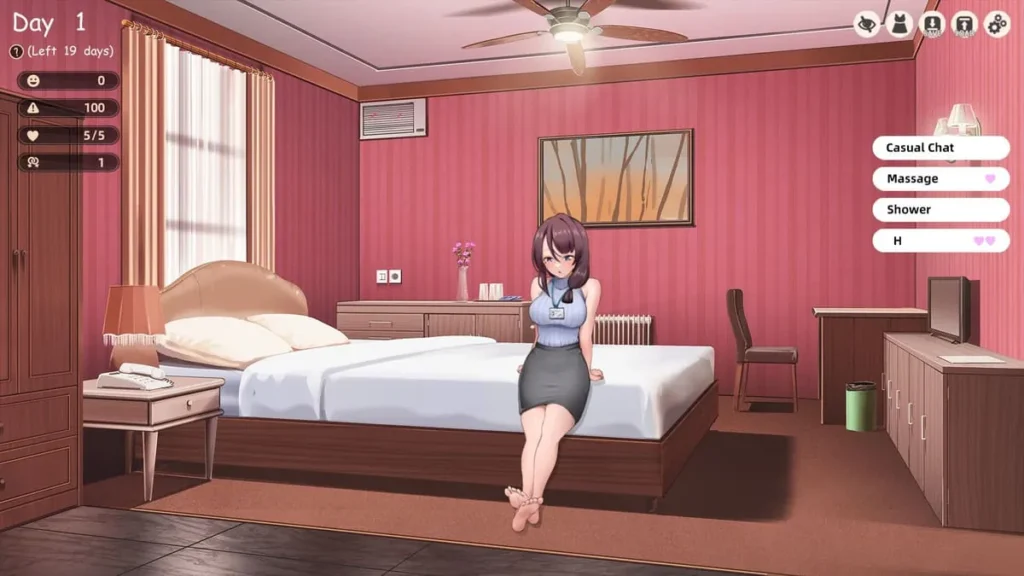
神的不在場SEX is a distinctive visual novel that combines narrative depth with strategic gameplay mechanics. Released in March 2024, this Taiwanese-developed title has garnered attention for its unique premise: two characters locked in a mysterious room by divine intervention must navigate complex relationship dynamics over 19 days. Unlike typical games in its genre, this title emphasizes character development and moral choices alongside its adult content. The game features branching storylines with multiple endings, a karma system that reflects player decisions, and optional content toggles that allow players to focus on narrative elements. Whether you’re interested in the story mechanics, character relationships, or gameplay strategy, this guide provides comprehensive insights into what makes this game stand out in the visual novel landscape.
Game Mechanics and Core Gameplay Systems
Alright, let’s pull back the curtain. The 神的不在場SEX gameplay mechanics are what transform it from a passive story into a deeply engaging, strategic puzzle. You’re not just reading a tale; you’re actively shaping its soul, wrestling with its systems, and facing the weight of every decision. Forget simple good/evil meters—this game builds a complex, reactive world around a few brilliant core systems. Getting a handle on these is the difference between stumbling into an ending and architecting the one you truly desire. 🎮
Let me tell you, my first playthrough was a disaster. I treated it like a typical visual novel, clicking through dialogues without a plan. I ran out of time, missed crucial character connections, and got an ending so bleak it left me staring at the screen for a good ten minutes. I wasn’t just a player who failed; I felt like a person who had failed within the game’s world. That’s the power of its design. So, let’s break down these systems so you can avoid my early mistakes and truly command the narrative.
Understanding the 19-Day Progression System
The entire experience is framed by a relentless 19-day progression system. This isn’t a suggestion; it’s the game’s heartbeat. You have exactly nineteen in-game days to navigate a crumbling world, build relationships, gather resources, and uncover truths. This creates an incredible sense of urgency and makes every single morning meaningful.
Think of each day as a precious resource in itself. You wake up, you see the day counter tick down, and you immediately have to ask: “What is my priority today?” The game masterfully uses this structure to force you into difficult trade-offs. Do you spend Day 12 investigating a mysterious rumor that could unlock a new story path, or do you use it to gather essential food to ensure you don’t face penalties? There is no “perfect” day where you can do everything. This 19-day progression system demands strategic forethought.
The beauty of this pressure-cooker environment is how it mirrors the story’s themes of scarcity and survival. My personal tip? Don’t try to see everything in one go. Embrace the fact that your first playthrough will be incomplete. Use it as a reconnaissance mission. Take mental notes: “On Day 7, if I talk to Character A, they mention Location B.” This intel is gold for your next attempt. The game expects and facilitates repetition with its fast-forward and skip features, allowing you to jump back to key decision points without reliving every moment.
The Karma Mirror and Consequence System
Now, let’s talk about the game’s moral compass and its most innovative feature: the Karma Mirror system. This is the brilliant core of the consequence system gameplay. It’s not a hidden stat buried in a menu; it’s a persistent visual element on your screen—a literal mirror reflecting the state of your soul based on your choices.
Here’s how it works visually and mechanically:
* Compassionate Actions: Helping others, sharing resources, offering kind words. These cause the Karma Mirror to glow with a soft, warm light. It feels rewarding, and more importantly, it opens up dialogue options and story paths that are only available to a “pure” reflection.
* Selfish/Harmful Actions: Stealing, lying for personal gain, abandoning those in need. Each of these choices physically cracks the Karma Mirror. The cracks spider-web across the surface, distorting the reflection. It’s a constant, unsettling reminder of your compromises.
This isn’t just cosmetic. The state of the mirror directly gates content. Some characters will only confide in you if your mirror is relatively clean. Certain areas of the story or specific endings become permanently inaccessible if the mirror is too fractured. It’s a real-time consequence system that visually and narratively punishes or rewards your behavioral pattern.
Pro Tip: The mirror remembers everything. A single crack from a minor theft on Day 3 will still be there on Day 19, affecting your final ending calculus. You can’t erase mistakes, only try to outweigh them with future good deeds.
Let me give you a practical example from my own playthrough:
On Day 5, I found a hidden cache of medicine. My character was healthy, but I knew a sick child in the shelter. The game presented me with a classic branching dialogue choice:
1. Take the medicine for yourself (for future use).
2. Give it to the child immediately.
3. Take it and promise to give it to the child later (a lie).
I chose option 3, thinking I could have my cake and eat it too—a “smart” play. The Karma Mirror immediately gained a sharp, prominent crack. The child’s character model changed; they looked paler and coughed in subsequent scenes. By Day 10, that child was gone from the story entirely, implied to have succumbed to illness. Furthermore, the child’s older sibling, who could have been a key ally in a later story arc, refused to speak to me, locking me out of their entire narrative branch and a potential “Community” ending. One “clever” choice had a cascading effect that reshaped my entire mid-game and limited my final options. That’s the raw, interconnected power of the Karma Mirror system.
To see how these core systems interact and define the gameplay loop, let’s look at this comparison:
| Gameplay Feature | Primary Function | Impact on Gameplay Experience |
|---|---|---|
| 19-Day Limit | Imposes a strict timeframe for all actions and story progression. | Creates constant tension and forces strategic prioritization. Makes every playthrough feel focused and replayable. |
| Karma Mirror | Provides real-time visual & mechanical feedback on moral choices. | Makes consequences tangible and immediate. Deeply personalizes the story by gating content behind behavioral paths. |
| Action Points (AP) | Defines how many commands (talk, explore, rest) can be performed each day. | Forms the core strategic layer. Players must budget AP like a currency to achieve daily and long-term goals. |
| Branching Dialogue | Every conversation choice can open, close, or alter story paths. | Empowers the player with meaningful agency. Encourages careful reading and role-playing, as there are no “filler” choices. |
Action Points and Daily Decision-Making
This brings us to the engine that drives your daily strategy: action points management. Each day, you are allotted a limited number of Action Points (AP). Every meaningful activity—initiating a conversation, exploring a new location, performing a story-critical action—costs AP. This is where the game’s strategic heart truly beats. 🌟
You might start a day with 5 AP. A deep conversation with a main character about their past might cost 2 AP. Exploring the ruined market district to scavenge could cost 1 AP. Using an item to help someone might cost 1 AP. Suddenly, your 5 AP are gone, and you haven’t even checked in on that other storyline you were following. This scarcity is the point! Action points management is the puzzle you solve every single morning.
Here’s my hard-earned advice for mastering your daily AP budget:
- Plan Your Route, Not Just Your Day: The game world is interconnected. If you know you need to talk to someone in the Square and then investigate something in the Old Town, plan a movement path that minimizes backtracking to save AP on “Move” commands.
- Rest is a Strategic Choice: The “Rest” command often costs AP but recovers your character’s stamina or health. Pushing yourself too hard for multiple days can lead to penalties or even lost days. Sometimes, spending 1 AP to rest on Day 8 is better than being forced to lose all AP on Day 9 due to exhaustion.
- Some Choices are AP Investments: That 2-AP intense conversation might not yield an immediate item or clue. Instead, it might deepen a relationship level, which unlocks a zero-AP event or crucial assistance three days later. Think long-term with your AP spending.
- Prioritize Locked Content: Pay attention to the branching dialogue choices that seem to open doors. If a character says, “Come find me tomorrow at the docks,” that’s a potential future story node. Allocating AP to follow up on these hooks is often more valuable than generic exploration.
Mastering this trifecta—the relentless 19-day clock, the morally reactive Karma Mirror, and the tight AP economy—is how you graduate from being a passenger to becoming the pilot of this haunting narrative. It’s how you navigate towards one of the multiple endings visual novel experiences on offer, each a direct report card on your choices, priorities, and the moral compromises you were—or weren’t—willing to make. Remember, in this world, time is your scarcest resource, your soul is your visible inventory, and every single point of action is a brushstroke on your final ending. Choose wisely, plan strategically, and don’t be afraid to let the mirror crack if it leads to a truth you need to see. The journey through these 神的不在場SEX gameplay mechanics is unforgettable. 🪞⏳⚖️
神的不在場SEX represents a thoughtful approach to visual novel design, combining strategic gameplay mechanics with meaningful narrative choices. The game’s 19-day progression system, Karma Mirror feedback mechanism, and branching dialogue structure create a dynamic experience where player decisions genuinely matter. Beyond its initial premise, the story unfolds as a pure love narrative exploring themes of redemption, genuine connection, and moral complexity. The inclusion of customizable content settings demonstrates respect for diverse player preferences, allowing both narrative-focused and fully immersive experiences. Whether you’re drawn to the strategic gameplay elements, the character-driven story, or the exploration of moral consequences, this title offers substantial depth. The multiple endings, hidden lore, and costume collection systems provide significant replay value for those seeking to experience all the game has to offer. For players interested in visual novels that balance adult content with meaningful storytelling and player agency, 神的不在場SEX delivers a distinctive experience worth exploring.