
A Summer’s End – Hong Kong, 1986
Play A Summer’s End – Hong Kong, 1986
A Summer’s End – Hong Kong, 1986 Screenshots







A Summer’s End – Hong Kong, 1986 review
Discover the heartfelt romance and vibrant 1980s visuals in this iconic visual novel
Imagine stumbling upon a chance encounter in the bustling streets of 1980s Hong Kong that sparks a tender romance between two women navigating love, identity, and family pressures. That’s the magic of A Summer’s End – Hong Kong, 1986, a visual novel that captures the neon glow of Mong Kok and the emotional depth of city pop vibes. I first played it during a rainy evening, and it hooked me with its lush hand-drawn art and interactive dialogue. Follow Michelle and Sam’s story as they explore their feelings amid cultural clashes—perfect for fans craving authentic retro romance. This guide dives deep into gameplay, endings, and tips to unlock every heartfelt moment.
What Makes A Summer’s End Hong Kong 1986 Unforgettable?
I remember the first time I loaded up A Summer’s End – Hong Kong 1986. It was a rainy afternoon, and within minutes, I was utterly transported. 🎮 What grabbed me wasn’t just the stunning art, but a feeling—that specific, aching tension of trying to decipher someone’s feelings while navigating a world that doesn’t feel built for yours. The Michelle and Sam romance captured that nervous, hopeful energy perfectly, the kind where a glance across a smoky bar or a hesitant touch speaks volumes more than words in a conservative setting. That’s the heart of this experience. So, what is A Summer’s End about? At its core, it’s a beautifully crafted 1986 Hong Kong visual novel about two women finding each other and themselves in a city pulsing with change.
This isn’t just another dating sim; it’s a heartfelt slice of life, a love letter to a time and place, and a poignant exploration of identity. Let’s dive into what makes this queer love story Hong Kong based tale so profoundly memorable.
Who Are Michelle and Sam? 🌆
The soul of the A Summer’s End Hong Kong 1986 story lives and breathes through its two leads. They aren’t archetypes; they feel like people you could have known, with dreams, fears, and complicated lives.
Michelle is our window into this world. A young office worker in her family’s import-export business, she embodies the pressure of tradition. She’s practical, a bit reserved, and shouldering the quiet weight of filial duty. Her life is a routine of work, family dinners, and polite outings with Joey, the “nice guy” suitor her mother approves of. Joey is genuinely kind, but his presence highlights the path expected of Michelle—a safe, conventional future where her own desires are secondary. Her character arc is a gentle unraveling of these expectations.
Then there’s Sam. 💖 A free-spirited graphic artist and film buff, she’s everything Michelle’s world is not: openly expressive, confident in her style (think sharp haircuts and bold fashion), and living life on her own creative terms. Sam is the catalyst. She doesn’t just enter Michelle’s life; she throws open a window, letting in light, music, and possibility.
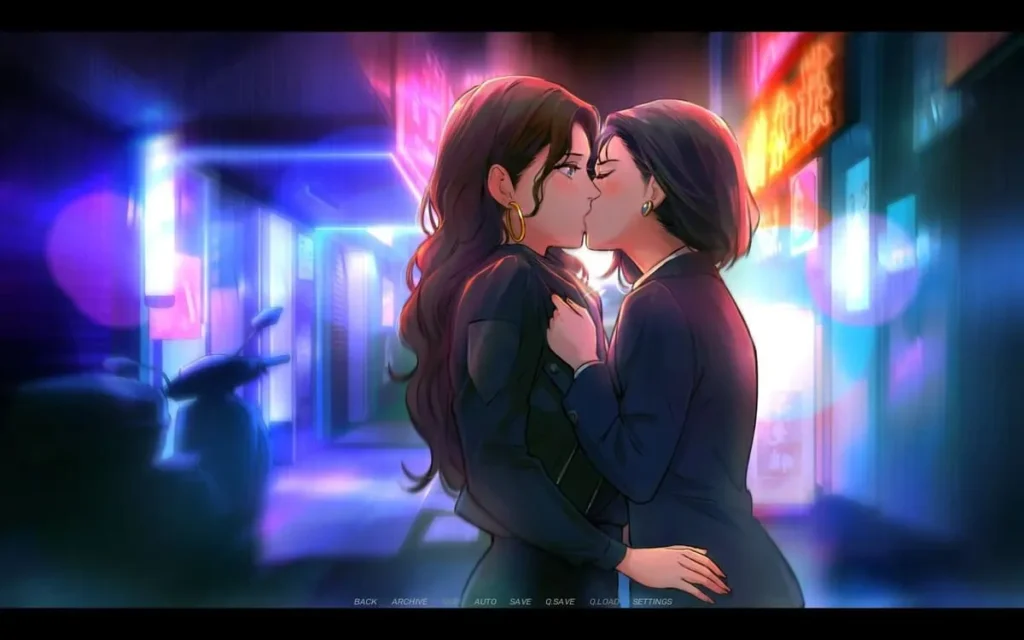
Their chemistry is the engine of the game. The Michelle and Sam romance develops through wonderfully awkward and authentic interactions. Conversations are full of oblique glances, hesitant compliments, and the thrilling subtext of two people circling something real. It’s in the way Sam introduces Michelle to city pop in her trendy apartment, or how Michelle finds herself drawn to the vibrant energy of Sam’s world in Mong Kok. The writing masterfully balances sweet, budding attraction with the very real anxiety of what it means to embrace these feelings in 1980s Hong Kong. Getting to know these A Summer’s End characters is the game’s greatest joy.
Why 1986 Hong Kong Sets the Perfect Backdrop? 🌃🎵
The setting is far more than just a pretty postcard; it’s a vital character in the narrative. The choice of 1986 Hong Kong is a stroke of genius, capturing a metropolis at a cultural crossroads. The Handover to China is still a decade away, and there’s a palpable sense of momentum—a blend of lingering colonial influence, booming capitalist energy, and deep-rooted Chinese traditions.
The game paints this era with incredible affection and detail:
* Mong Kok Setting Game: The district of Mong Kok is brought to life with buzzing neon signs, crowded market streets, and the iconic red taxis. It’s a world of hidden dai pai dongs (open-air food stalls) and video arcades, representing the vibrant, chaotic heart of the city where Sam feels most at home.
* Cinematic & Musical Homage: The visuals are a love letter to Hong Kong cinema of the era, with clear nods to the styles of directors like Wong Kar-wai. This is fused with a gorgeous aesthetic inspired by 80s anime and the smooth, nostalgic sounds of city pop and vaporwave. The soundtrack, featuring artists like Timecop1983, Crystal Cola, and Stevia Sphere, is absolutely essential. It wraps every scene in a warm, synth-heavy blanket of mood that perfectly encapsulates the feeling of a hazy, beautiful memory.
* Contrasting Spaces: The game constantly contrasts environments to reflect the characters’ inner worlds. The chaotic, fluorescent energy of Mong Kok stands against the tranquil, sprawling seascapes of Sai Kung—a place for quiet reflection. Then there’s the sleek, modern but impersonal space of Michelle’s office, representing the rigid structure she’s trying to break free from.
This rich backdrop does more than set the mood; it actively informs the characters’ struggles. The tension between modern aspirations and traditional family values is baked into the very streets they walk.
How Does the Story Tackle Love and Identity? 💞
This is where A Summer’s End – Hong Kong 1986 truly shines. It tackles weighty themes with a delicate, nuanced hand, avoiding sensationalism to offer something genuinely relatable.
- Queer Love Without “Tragedy Exploitation”: The queer love story Hong Kong narrative is refreshingly focused on the personal and emotional, not the purely political or tragic. While the societal context of homophobia and family conflict is ever-present, the story doesn’t use its characters as mere vessels for suffering. The conflict is internal and interpersonal: Michelle’s fear of disappointing her family, the stress of keeping a part of yourself secret, and the courage it takes to choose an authentic life.
- The Weight of Family & “Face”: Michelle’s relationship with her mother is a central pillar. The concept of “face” (social reputation and familial honor) looms large. Her outings with Joey aren’t just awkward dates; they’re performances of a “good daughter” role. The game sensitively explores how love can feel like a choice between personal happiness and familial duty.
- Seeking Meaning in a Changing World: Both Michelle and Sam are, in their own ways, searching for their place. Michelle seeks freedom from a predefined path, while Sam, for all her confidence, is also building a life and career on her own terms. Their romance becomes part of that larger search for meaning and authenticity.
“I held my breath during the rain scene. After all that tension, that silent communication, the release was overwhelming. It’s one of the most beautifully earned moments I’ve ever experienced in a game.” – A player’s reflection on the game’s emotional climax.
Key themes woven throughout the A Summer’s End Hong Kong 1986 story include:
* The thrill and terror of romance outside societal norms.
* The immense weight of family pressures and cultural expectations.
* The journey of cultural and personal identity in a transitional era.
* A deep, affectionate sense of 80s nostalgia, not just for aesthetics, but for a specific feeling in time.
My Personal Insight & Actionable Advice: 🧠
To fully appreciate this narrative, don’t just click through dialogue. Listen. Pay attention to what isn’t said. Notice how the background art shifts with the characters’ moods. Let the soundtrack sink in. The game’s magic is in its subtlety—the pause before Sam answers a question, the way Michelle looks at her reflection after meeting her. Your choices in dialogue often aren’t about grand declarations, but about small moments of vulnerability or deflection. These nuances are what make the Michelle and Sam romance feel heartbreakingly real.
The story culminates in two distinct endings, shaped by the choices you make throughout. These aren’t simply “good” or “bad,” but reflections of courage, communication, and timing.
| The “Good End” – A Kiss in the Rain | The “Somber End” – Paths Diverge |
|---|---|
| This ending is a cathartic, romantic masterpiece. It requires Michelle to be brave, to confront her feelings and choose her own path despite the risks. The iconic rain-soaked kiss is a powerful visual release of all the built-up tension, symbolizing clarity, acceptance, and a hopeful step forward together. | If Michelle remains unable to break from her expected path or fails to communicate her true feelings, this ending unfolds. It’s melancholic and realistic, focusing on the quiet ache of a connection that couldn’t blossom under pressure. It underscores the cost of inaction and the weight of tradition, leaving both characters in a state of unresolved longing. |
So, why is A Summer’s End – Hong Kong 1986 truly unforgettable? 🏁 It’s because it’s so much more than a quick-burn romance. With its over 400 hand-drawn assets and curated synth soundtrack, it creates an immersive time capsule. But more importantly, it uses that capsule to tell a universal story about personal growth. It’s about finding the courage to look at the life laid out for you and having the strength to wonder, “Is there another way?” For Michelle, that other way has a name, a smile, and an offer to see the world differently. This 1986 Hong Kong visual novel is a tender, vibrant, and ultimately hopeful reminder that sometimes, the most radical act is simply choosing to be yourself.
A Summer’s End – Hong Kong, 1986 wraps you in a nostalgic embrace of 1980s Hong Kong while delivering a poignant tale of love between Michelle and Sam. From vibrant neon streets to intimate rain-soaked confessions, it masterfully blends art, music, and story to explore identity and connection. Whether you chase the heartfelt good ending or reflect on the bad one’s melancholy, this visual novel leaves a lasting impression. Dive in today, grab the adult patch for deeper intimacy if it suits you, and let its city pop soundtrack transport you. Share your favorite moments in the comments—what drew you to this gem?