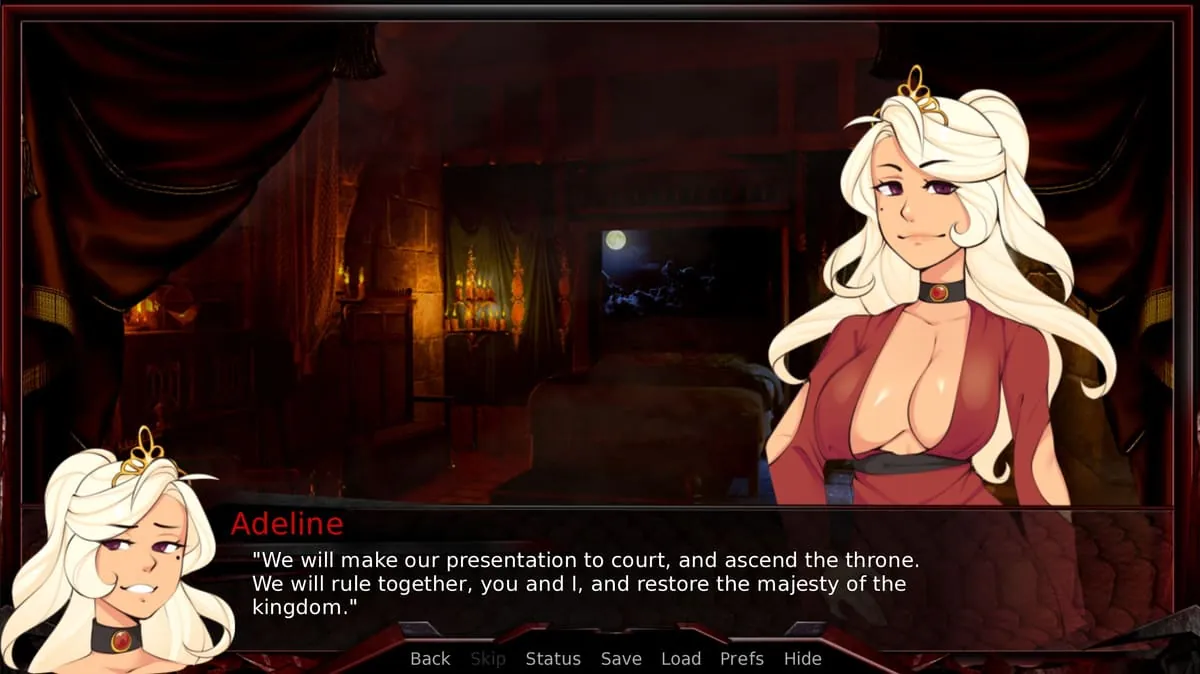
Corruption Time
Play Corruption Time
Corruption Time Screenshots




Corruption Time review
Master gameplay mechanics, character routes, and progression systems in this adult simulation RPG
Corruption Time stands out as a sophisticated adult simulation RPG that combines intricate gameplay mechanics with branching narrative paths. This guide explores the core systems that make the game engaging, from character interactions and progression mechanics to strategic decision-making that impacts your gameplay journey. Whether you’re new to the game or looking to optimize your playthrough, understanding these fundamental systems will significantly enhance your experience and help you unlock all available content.
Understanding Core Gameplay Mechanics and Systems
Welcome, strategist! 👋 So you’ve stepped into the intricate world of Corruption Time, and you’re ready to move beyond simply clicking through scenes. You want to master its systems, unlock every path, and truly bend the narrative to your will. I get it—my first playthrough was a mess of missed opportunities and locked doors. I poured resources into the wrong character, made a critical choice too early, and hit a progression wall that took hours to undo. 🫠
But that’s why you’re here. This chapter is your deep dive into the engine room of Corruption Time gameplay mechanics. We’re going to strip down the character progression system, map the delicate dance of relationship building, master the resource management strategy, and learn how every single choice ripples through your game. Consider this your essential Corruption Time walkthrough tips manifesto, designed to turn a chaotic experience into a finely tuned campaign of narrative control. Let’s begin.
Character Progression and Relationship Building
At its heart, Corruption Time is a game about influence. Your power isn’t just measured in stats, but in the affection level and narrative sway you hold over its cast. Understanding this dual-track system—your own development and the relationships you cultivate—is the absolute key to unlocking the game’s content.
First, let’s talk about you. Your character progression system is governed by three core attributes: Charm, Cunning, and Resources (the in-game term for your social capital). You boost these primarily by making specific choices in events and dedicating time to self-improvement actions like “Study Psychology” (Cunning) or “Social Networking” (Charm). Why does this matter? Because every major character route has hidden attribute checks. You might have maxed out a character’s affection, but if your Cunning isn’t high enough, you’ll be blocked from a pivotal story branch that leads to their most unique scenes. It’s a classic, yet often overlooked, game progression optimization trick: always check your primary attributes before initiating a key story event.
Now, for the real meat of the experience: the relationship building guide. Characters don’t just have a simple love meter. They have complex personalities, moods, and flags that must be triggered in sequence. Progression is typically tiered, moving from Acquaintance to Friend, to Confidant, and finally to the unique route-specific tiers. Each tier requires a combination of:
* Spending time with them (using your limited daily actions).
* Gifting specific items they favor (which costs in-game currency).
* Making narrative choices that align with their personal values or secret desires.
* Completing optional tasks or errands they provide.
Fail to meet these requirements, and you’ll be soft-locked, unable to advance their story until you backtrack or, worse, start a new playthrough. I learned this the hard way with the character “Elias.” I thought being consistently nice would be enough. I spent weeks (in-game time) boosting his affection, only to find I’d neglected to complete a small, seemingly insignificant task he’d mentioned in Act 1. That single oversight locked me out of his entire mid-game arc. It was a brutal lesson in the game’s demanding but rewarding logic.
To visualize this, here’s a breakdown of the typical progression framework:
| Relationship Tier | Key Requirements | Primary Resource Cost | Unlocked Actions & Content |
|---|---|---|---|
| Acquaintance | Initial story encounter; basic positive dialogue choices. | Time (1-2 interactions) | Basic conversations; ability to view character profile. |
| Friend | Affection Level 30; discover and mention a personal interest; complete 1 small favor. | Time + Small Gift (50-100 Currency) | Invitations to public locations; unlocks character-specific daily tasks; reveals more backstory. |
| Confidant | Affection Level 65; pass a mid-level attribute check (e.g., Charm 40); resolve a personal conflict for them. | Time + Expensive Gift (200-300 Currency) + Attribute Investment | Private meetings; access to their home; unlocks major narrative decisions that affect their path; romantic/physical intimacy options begin. |
| [Route-Specific Tier] | Affection Level 90+; pass a high-level attribute check; make an irreversible narrative choice in their favor. | Major time investment + Rare Gift + Permanent story commitment | Final story arc for that character; exclusive endings; maximized influence over the game’s ending state. |
The golden rule? Focus on one, maybe two, primary routes per playthrough. The game’s design actively punishes trying to romance everyone simultaneously due to the intense resource management strategy required for high-tier advancements.
Resource Management and Economic Systems
If relationships are the destination, resources are the fuel for your journey. Corruption Time brilliantly ties its economy directly into its narrative tension. You are perpetually short on time, money, and social energy, forcing you to make strategic choices that define your playthrough.
Your main resources are:
* Time (Daily Actions): You get a limited number of “action points” per day. Everything—working, socializing, improving yourself—costs points.
* Currency: Earned primarily through your “Job” action (reliable but low yield) or by succeeding in high-risk Cunning-based opportunities (lucrative but can backfire).
* Social Favors: A special currency earned by helping characters. These are crucial for unlocking certain doors—literally and figuratively.
My foundational resource management strategy is simple: specialize early. Decide on your primary character route and the attribute (Charm/Cunning) that best supports it. Then, allocate ruthlessly.
* Early Game (Days 1-20): Prioritize earning Currency and boosting your key attribute. Spend 60-70% of your time on income-generation and stat-building actions. Use the remaining time for low-cost interactions with your target character(s). Avoid expensive gifts at this stage.
* Mid Game (Days 21-50): Now you should have a financial cushion and a decent attribute level. Shift focus. Spend 60-70% of your time directly on relationship-building activities and completing character-specific tasks. Use your saved currency for the mid-tier gifts required to jump from Friend to Confidant.
* Late Game (Days 51+): This is about commitment. Your resources should be funneled almost entirely into your chosen route to afford the rare gifts and to pass the final, demanding attribute checks.
💡 Pro Tip: The “Job” action isn’t just for cash. Each job type (e.g., Bartender, Tutor, Office Temp) provides unique dialogue options and minor stat boosts with certain characters. Choose a job that synergizes with your desired route!
The economic pressure is a core part of the Corruption Time gameplay mechanics. That feeling of “I can’t afford to do everything I want” is intentional. It forces you to role-play a character with limited means, making the eventual payoff of unlocking an exclusive scene feel earned. This is where your Corruption Time walkthrough tips become critical: always check the in-game calendar for known “payday” events or special opportunities where rewards are doubled, and plan your major purchases around them.
Strategic Decision-Making and Route Optimization
This is where all the systems converge. Every choice in Corruption Time has weight. The decision-making impact gameplay isn’t just about getting a “good” or “bad” ending; it’s about meticulously constructing the narrative path you want to witness.
The most important concept is the Point of No Return (PONR). Each major character route has one or two of these—critical story decisions that permanently lock you into their path and lock you out of others. The game rarely shouts this at you. It might be a quiet choice to “stay the night” or a dramatic public declaration. Once you cross a PONR, your save file is essentially dedicated to that storyline.
Therefore, the ultimate game progression optimization strategy is to play multiple focused playthroughs. Don’t try to see everything in one go. Instead, use your first run as a scouting mission. Explore freely, take notes on where certain choices lead, and identify which character’s story resonates with you. Then, on subsequent playthroughs, you can execute a precise plan.
To avoid getting stuck and maximize content access, follow this strategic checklist:
- Before any major story event, save in a new slot. This is non-negotiable.
- Prioritize raising your primary attribute (Charm or Cunning) to 50 before Day 40. This opens the most dialogue options.
- Complete at least one “favor” for every major character in Act 1, even if you don’t plan to pursue them. This often unlocks useful general perks or information.
- Do not spend your “Social Favors” on minor discounts. Save them for the critical path unlocks that are otherwise impossible.
- The optimal sequence is: Stat Build -> Income Focus -> Relationship Deep Dive -> Route Commitment. Deviating from this often leads to resource starvation.
The cascading effects are real. For example, choosing to help Character A in a dispute will make Character B permanently cold toward you, closing off their entire route. This isn’t a flaw; it’s the game asking you to live with meaningful consequences. My advice? Lean into it. The most satisfying playthroughs are the ones where you fully commit to a role and a desired outcome, embracing the decision-making impact gameplay as the core feature, not an obstacle.
Ultimately, mastering Corruption Time is about understanding that it’s a complex clockwork of interconnected systems. Your character progression system enables the social access defined in the relationship building guide, which is funded by your resource management strategy, all guided by the strategic decision-making impact gameplay. By treating your playthrough with the thoughtful planning these Corruption Time gameplay mechanics deserve, you transform from a passive observer into the architect of the story. Use these Corruption Time walkthrough tips, plan your route, manage your assets, and watch as the entire world unfolds according to your design. 🎭 Now go forth and optimize your game progression. Your perfect ending awaits.
Mastering Corruption Time requires understanding both its mechanical systems and strategic decision-making framework. By carefully planning your character interactions, managing resources efficiently, and sequencing your route progression thoughtfully, you can unlock the full breadth of content the game offers. The key to a satisfying playthrough lies in recognizing that your choices have lasting consequences—prioritizing character completion before making irreversible decisions ensures you won’t find yourself locked out of valuable content. Whether you’re pursuing specific character routes or aiming for comprehensive completion, the strategies outlined in this guide provide a foundation for optimizing your gameplay experience and discovering everything Corruption Time has to offer.