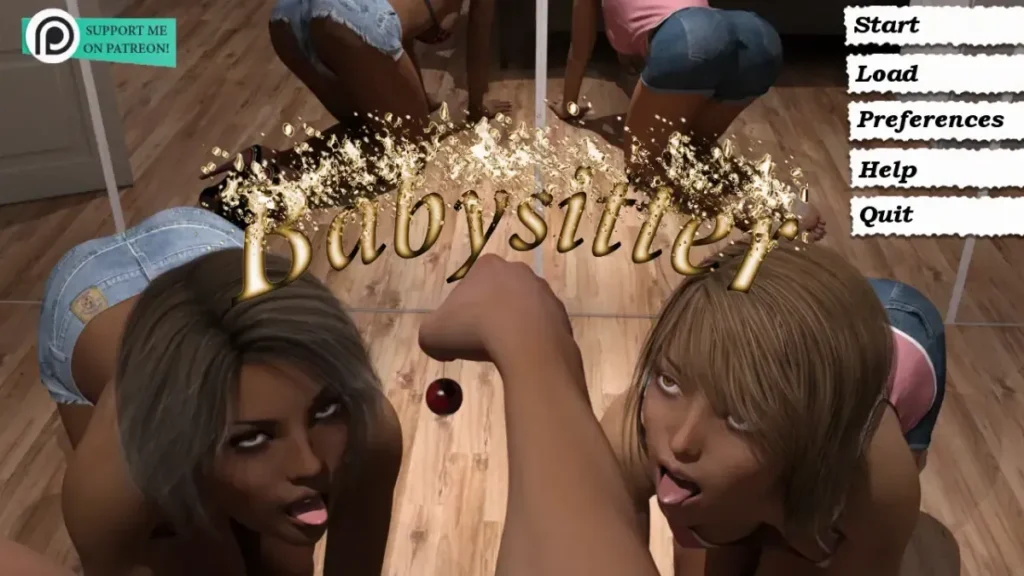
Babysitter
Play Babysitter
Babysitter Screenshots





Babysitter review
A clear look at the Babysitter adult game, its routes, scenes, and what to expect while playing
Babysitter is an adult interactive game built around choice-driven storytelling, character routes, and unlockable scenes. If you are curious about how the game works, what makes different playthroughs feel distinct, and how to approach the main paths without missing important moments, this guide gives you a practical starting point. I first looked at it as a simple narrative game, but the deeper I went, the more it felt like a branching experience where small decisions matter a lot. In this article, I’ll walk through the game’s structure, major route logic, and the kinds of choices that shape the outcome.
What Is Babysitter and How Does It Work?
So you’ve stumbled across the Babysitter game and you’re not sure what you’re getting into. Maybe you’ve heard a friend whisper about it, or you caught a glimpse of a scene online and got curious. I get it — I felt the exact same way the first time I loaded it up. You’re expecting a simple adult game, but then you realize there’s a real story underneath the surface, and suddenly you’re second-guessing every click. That’s the magic of the Babysitter adult game: it’s not just about unlocking content — it’s about unlocking a narrative that responds to you.
In this chapter, we’ll strip away the mystery. I’ll walk you through exactly what this Babysitter interactive game is, how the choices work, and why your first playthrough will feel completely different from your second. By the time you finish reading, you’ll know what to expect, how to approach the routes, and why a guide like this one exists in the first place.
What kind of game is Babysitter?
Let’s cut to the chase: the Babysitter game is a choice-driven adult visual novel. You don’t run around, swing a sword, or solve puzzles. Instead, your main tools are reading, thinking, and deciding. The entire experience unfolds through dialogue trees, scene triggers, and relationship states. Think of it more like an interactive book where your screen is the page and your mouse is the bookmark.
The core loop is straightforward: you read a scene, you’re presented with Babysitter choices, and those choices determine which scene you see next. It’s not a sandbox or a simulator — it’s a Babysitter story game with a beginning, multiple middles, and several endings. The adult content is woven into the narrative, meaning you can’t just skip to “the good stuff” without understanding the characters and their motivations.
I remember my first session. I clicked through a few decisions thinking I could just rush toward the unlockable scenes. Big mistake. I ended up on a route that was short, cold, and left me feeling like I’d missed half the story. That’s when I realized this Babysitter adult game demands your attention. It rewards you for caring about the characters and for paying attention to the small details in their reactions.
The tone of the game is contemporary and grounded. There’s no fantasy or sci-fi twist — it’s set in a familiar, everyday world. This makes the interactions feel more personal, almost uncomfortable at times. The game leans into that tension, using it to drive the narrative forward. If you’re coming from other adult games that are more arcade-style, this will feel like a slower burn. But that’s the point — the pacing allows the story to breathe.
How do choices shape the story?
Here’s the part that trips most newcomers up: Babysitter gameplay isn’t linear. Every dialogue option you pick is like flipping a switch on a track. One moment you’re having a casual conversation with the main character, and the next you’ve triggered a scene that closes off three other possibilities.
The game uses a branch-and-return structure. Some choices lead to short branches that loop back to the main narrative, while others split the story permanently. There are also hidden affection meters and relationship thresholds that you can’t see directly. The game doesn’t show you a percentage bar — you have to infer from the character’s dialogue whether you’re heading down a friendly, romantic, or hostile path.
Let me give you a concrete example. Early in the first act, you’re asked whether you want to help the babysitter clean up or leave and go do your own thing. This seems like a throwaway decision, right? But here’s how it plays out on different runs:
- If you choose to help, you unlock a short conversation where the babysitter shares a personal detail about her past. This opens a dialogue option later that leads to a secondary route.
- If you choose to leave, the scene ends quickly. You miss that personal detail entirely. Later, when that dialogue option would have appeared, it’s gone. Instead, you get a different conversation where the babysitter comments on you being distant.
That single Babysitter choice doesn’t determine the ending by itself, but it sets the tone. As you stack these small decisions, the story shifts in subtle ways. By the end of the game, two players who made different choices in the first five minutes might not recognize each other’s playthroughs.
This is why Babysitter choices matter so much. The game is designed to make you feel the weight of your decisions, even when they seem trivial. It’s not about good or bad — it’s about consistency. If you act interested one minute and dismissive the next, the characters will notice and respond accordingly.
What makes each playthrough feel different?
Replay value is where the Babysitter interactive game truly shines. On my first run, I finished the main story in about four hours, but I only saw about 40% of the content. That’s not a bug — it’s a feature. The game deliberately hides scenes behind multiple conditions, so you have to play through several times to unlock everything.
Three key elements make every playthrough feel fresh:
- Variable dialogue trees: Even if you choose the same option as before, the game remembers what you did in earlier scenes. If you were kind to the babysitter in the first act, she’ll reference it in the third. If you were rude, she’ll call you out. These callbacks create a sense of continuity that makes each run feel personalized.
- Hidden scene triggers: Some scenes only appear if you’ve made a specific series of choices across multiple acts. For example, to unlock a particular evening scene, you must have chosen to stay late on two separate occasions and also selected a supportive dialogue option during a crisis moment. These triggers are never explained — you have to discover them through trial and error or by using a guide.
- Affection levels that shift behavior: The main characters react differently based on your accumulated affection score. Higher affection unlocks warmer dialogue, additional backstory, and more intimate scenes. Lower affection leads to colder interactions, shorter conversations, and closed-off routes. Because the affection changes gradually, you don’t always notice it until you compare two playthroughs side by side.
I remember my second playthrough specifically. I thought I was making similar choices, but I accidentally picked a more aggressive reply early on. By the middle of the story, the babysitter was actively avoiding me. Scenes I had seen before were truncated, and the final act felt hollow. It was jarring — in a good way. It showed me how much the Babysitter story game responds to your input.
If you’re the type of player who likes to see everything, you’ll need multiple runs. I recommend taking notes or following a route guide your first few times. A guide doesn’t spoil the experience — it helps you avoid dead ends where the story becomes repetitive. The Babysitter gameplay loop is built for replaying, so don’t feel bad about looking things up.
“The game rewards careful attention. I missed an entire route because I didn’t realize a single choice in the prologue locked it off. Once I knew, the whole story opened up.”
FAQ
Here’s a quick set of answers to common questions about the Babysitter adult game:
Q: What type of game is Babysitter?
A: It’s a choice-driven adult visual novel focused on narrative, character relationships, and branching routes. There is no combat or exploration — your main activity is reading and selecting dialogue options.
Q: Is Babysitter suitable for all adult players?
A: The game contains explicit adult content, but it is story-integrated, not gratuitous. The tone is mature with emotional depth, so it works best for players who enjoy character-driven drama alongside the adult scenes.
Q: Do I need to replay the entire game to see new content?
A: Yes. The branching structure means you cannot unlock all scenes in a single run. A typical full completion requires three to five playthroughs, depending on how carefully you make choices.
Q: Can I skip dialogue to speed up replays?
A: Most versions of the game include a skip or fast-forward option for text you’ve already read. Use it carefully, because new dialogue can appear in scenes you thought were identical.
Q: Why would I search for a guide for this game?
A: A guide helps you find hidden scene triggers, understand affection requirements, and avoid accidental dead ends. Without one, you risk missing major content or getting stuck in a loop of similar outcomes.
That’s the core of what the Babysitter game offers — a deep, reactive narrative that changes with every decision. Whether you’re here for the story, the characters, or the adult content, the experience is shaped entirely by the choices you make. Now that you know how it works, you’re ready to dive in and start shaping your own route.
Babysitter stands out because it turns a simple premise into a branching experience shaped by careful choices, route planning, and replayable scenes. If you approach it with patience and pay attention to the small details, the game reveals much more depth than it first appears to have. The best way to enjoy it is to treat each playthrough like a new route experiment, noticing which decisions open different outcomes and which ones close them off. If you want the fullest experience, start with one clear path, then replay with a different approach and compare how the story changes.